

The nuances of safe milk handling
- Jan 30
- 4 min read
Most parents are familiar with the basic breastmilk storage guidelines, like how long milk can sit at room temperature, how many days it can stay in the refrigerator, and when it should be frozen. Organizations like La Leche League and The Breastfeeding Network provide excellent foundational guidance on this and they are resources I personally rely on.
Where families often need more support, however, is in the grey areas - the real life situations that don’t always fit neatly into a chart. This post focuses on those nuances, so you can make (and so that I can remember) more informed, confident decisions about handling and storing human milk.
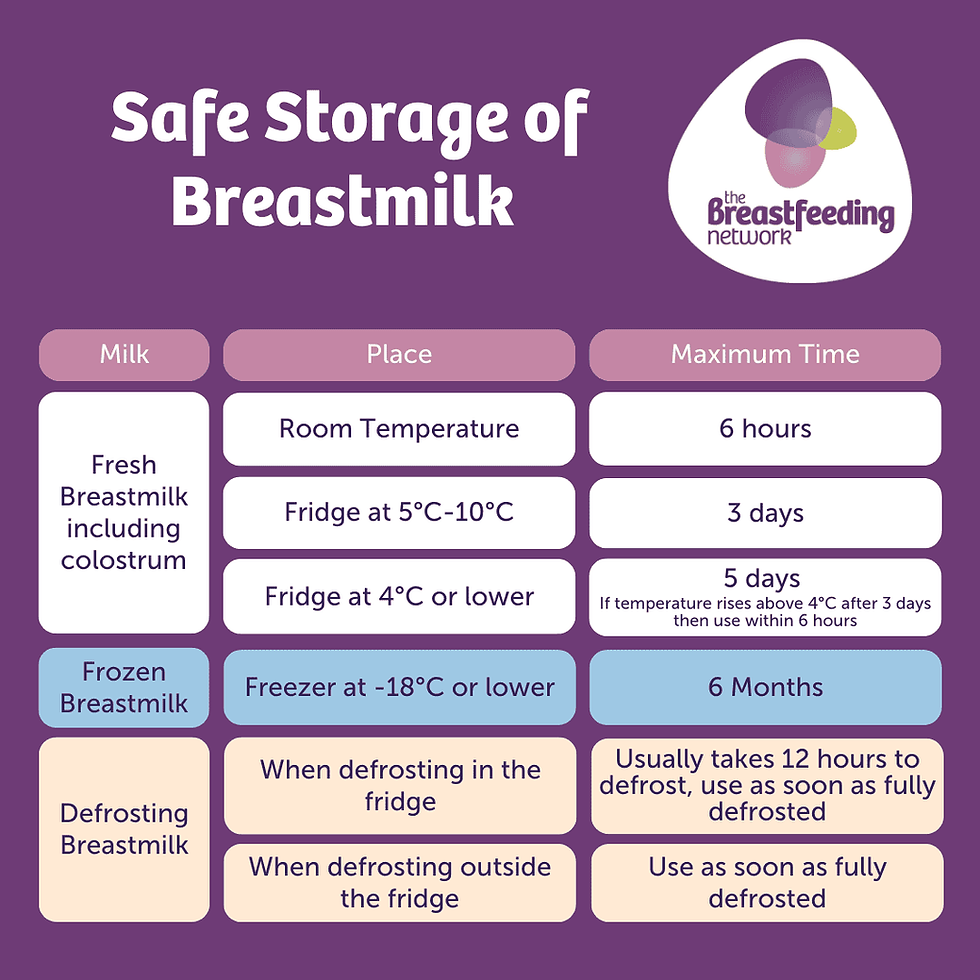
🥛 Temperature Stability Matters More Than the Exact Hour
One of the most overlooked aspects of milk storage is temperature consistency:
→ Breastmilk should be stored toward the back of the refrigerator, not on the door
→ The refrigerator door experiences frequent temperature fluctuations due to opening and closing
→ Repeated warming and cooling can impact milk quality over time
→ Best practice: Store milk on a middle or back shelf, as close to the cooling element as possible, where temperatures are most stable.
🥛 Ice Crystals = Milk Is Still Frozen
A common source of anxiety is partially thawed milk. But even I was surprised to learn that if frozen breastmilk:
→ Still contains ice crystals
→ Is cold to the touch
→ Has not fully thawed
🙌 It is considered frozen and can be safely refrozen
This guidance is supported by both La Leche League and The Breastfeeding Network, and it’s especially relevant during:
→ Power outages
→ Cooler transport
→ Freezer door openings
Once milk has fully thawed (no ice crystals remain), it should be treated as refrigerated milk and not refrozen. Ideally if it has experienced a power outage and the milk has experienced a drop (even if it still has ice crystals), that it be used sooner rather than later regardless. Use the first-in-first-out method strictly for these cases.
🥛 Thawed Milk Smell and Appearance Can Vary
Milk doesn’t always look or smell the same after freezing and that alone DOESN’T mean it’s unsafe.
Normal changes include:
→ Separation of fat (this is expected)
→ Slightly soapy or metallic smell (often related to lipase activity)
→ Color variation depending on diet and stage of lactation
What matters most:
→ Milk does not smell rancid or sour
→ Milk was handled and stored appropriately prior to freezing
🤔 When in doubt, trust both your senses and the storage history.
🥛 Warming Milk: Gentle Is Better
Overheating breastmilk can damage some of its protective properties and cause hot pockets.
→ Avoid using microwaves or boiling water to heat the milk as it can result in uneven heating or over-heating. Instead, warm milk slowly in warm-hot water either in a bowl on your countertop or in a bottle warmer.
Milk does not need to be “hot” to be safe or effective; body-temperature or even cool milk is acceptable for many babies. I’m an advocate for getting your babe to take cool milk so that it is less of a fuss overall.
🥛 Clean Handling Is More Important Than Sterility Obsession
You do not need a sterile environment to safely handle milk. You need clean hands and clean containers.
Focus on:
→ Handwashing before pumping or transferring milk
→ Clean pump parts according to manufacturer guidelines
→ Using containers designed for human milk storage
👎 Over-sanitizing can add stress without significantly improving safety for healthy, term infants in home settings.
🥛 Transporting Milk With Cold Packs
When transporting expressed milk:
→ Use an insulated cooler
→ Add ice packs
→ Keep milk cold consistently
Milk stored in a properly packed cooler with ice packs can often remain safely chilled for up to 24 hours, depending on conditions - but again, temperature stability is the key here.
🥛 When Extra Caution Is Needed
Some situations require STRICTER handling guidelines, including:
→ Premature infants
→ Medically fragile or immunocompromised babies
→ NICU or hospital settings
In these cases, follow guidance provided by your healthcare team or institution, which may differ from home-use recommendations.
🥛 A Note on Guidelines
Milk storage guidelines are designed to be protective, not punitive. They assume worst-case scenarios to keep babies safe. Please remember that real life is often more nuanced.
Understanding why guidelines exist allows families to make thoughtful decisions without unnecessary anxiety or waste.
🙌 Information like this should build confidence, not fear.
References & Further Reading
Primary references used in this post:
→ La Leche League International - Human Milk Storage Guidelines
→ The Breastfeeding Network (UK) - Expressing and Storing Breastmilk
Additional evidence-based resources:
→ Academy of Breastfeeding Medicine (ABM) Clinical Protocol #8: Human Milk Storage
→ Centers for Disease Control and Prevention (CDC) - Proper Storage and Preparation of Breast Milk
→ Health Canada - Safe Storage of Expressed Breast Milk
→ World Health Organization (WHO) - Breastfeeding and Milk Handling Guidance


Comments